

How Deer Park, TX Cut Reporting Time by 80%:
Deer Park's water treatment team traded fragmented spreadsheets and paper logs for real-time data entry
80%
faster monthly reporting
460
data points automated per day
8 operators
relying on real-time data
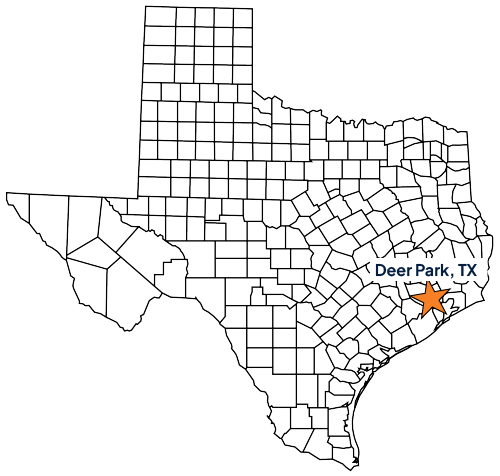
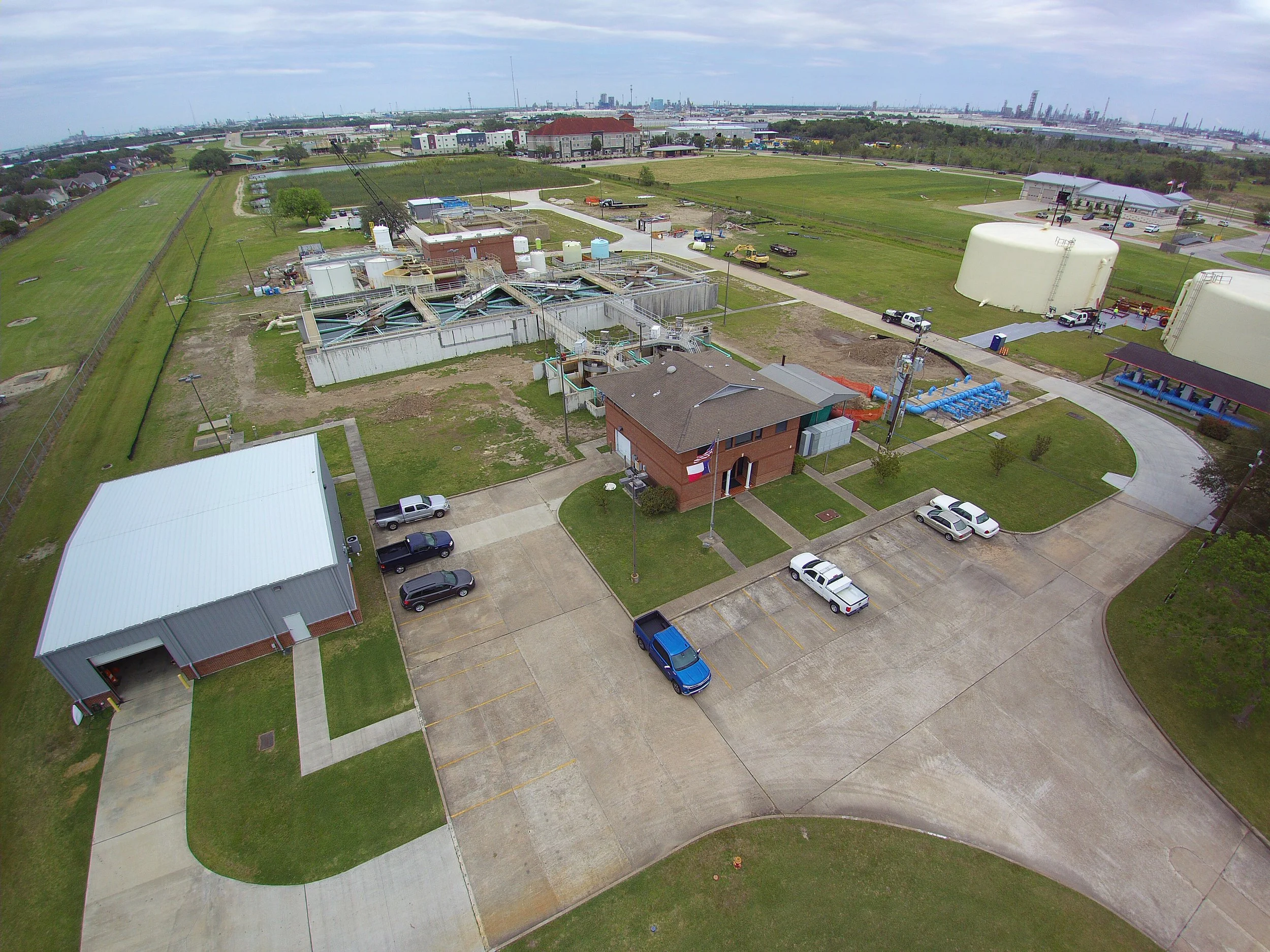
Deer Park, TX operates a surface water treatment plant and four remote storage sites, supplying drinking water to the community. A team of 8 operators (split across two 12-hour shifts, with administrative and lab staff on standard business hours) keeps the plant running seven days a week.
ABOUT DEER PARK, TX
Industry: Municipal Water Treatment
Type: Surface Water
Average Daily Flow: 4.5 MGD
Products Used: Rounds
AT A GLANCE
After outgrowing an unsupported legacy system (SEMS by Cartegraph, discontinued after an acquisition), Deer Park Public Works Department moved to Waterly Rounds in their water treatment plant and cut monthly reporting time by roughly 80%, automated more than 400 data points a day, and built a real-time error-flagging workflow that catches problems before they threaten compliance.
PROBLEM ADDRESSED
Current reporting process showed significant human error
Before Waterly, Deer Park's operators logged readings by hand on clipboards, then re-entered them into SEMS by Cartegraph. Typically, this process was delayed and, unfortunately, usually resulted in transcription errors. Six to eight sheets and roughly 460 data points had to be recorded every day, covering hourly readings, four-hour state-mandated samples, and daily logs. Errors were hard to catch: readings that looked plausible could still be wrong, and often weren't caught until the state report was being assembled at month's end. Tracing a single bad entry back to its source (pulling data from an analyzer, uploading it, and parsing a CSV file) took about an hour. On at least one occasion, an operator logged a turbidity reading of 5.0 instead of 0.5, a mistake serious enough to trigger a boil-water notice; it was only caught by cross-referencing the analyzer's digital log against the paper sheet before the state report went out.
SOLUTION USED
Won over the board on price, won over the team on simplicity
“We have a guy who writes numbers like he’s signing a prescription. It looks like a heartbeat monitor. Reading the handwriting was the hardest part of the job.”
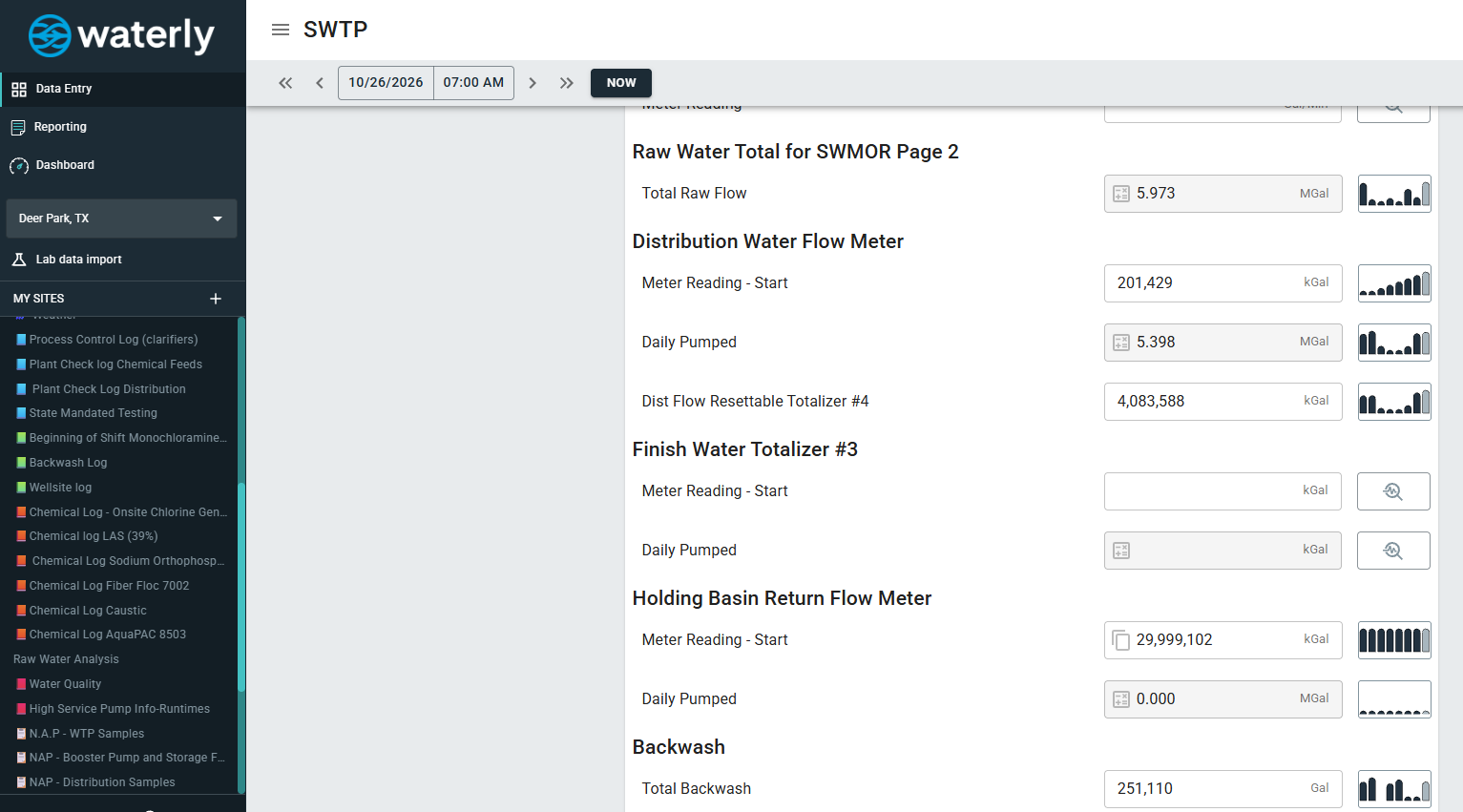
When it came time to replace an unsupported SEMS license, Deer Park ran the three-quote process many public utility boards require, and Waterly won largely on price, undercutting the other providers clearly enough that, in the team's words, it was “a no-brainer.” Price got Waterly in the door, but the workflow is what made the switch stick: instead of forcing operators to hunt through an unorganized list, Waterly organizes data entry to mirror how the operator goes through his/her day; by shift and also surfaces exactly what needs attention for a given sample schedule. That ease of adoption is what turned the lower price point into measurable efficiency. Real-time out-of-range flagging and immediate email alerts mean supervisors catch problems the same day instead of at month's end, and a full history log gives them a clear audit trail without extra effort. The result is a platform operators picked up quickly, at a price the board could approve, that pays for itself in time saved every month.
“It’s the workflow: how the guys log in, and the way it’s set up. They’ve got all the different areas they need to be focusing on for that particular sample set or data entry.”
OUTCOMES
Cuts monthly reporting time by roughly 80%. Building the state-mandated monthly report used to take about 4 hours, including time spent chasing down and correcting fat-fingered entries. With Rounds, that same report now takes 30 to 45 minutes. Data flows in as operators enter it, so building a report is closer to a direct export than a manual reconciliation.

Cuts error-tracing time roughly in half. Under SIMS, finding the source of a single bad entry meant pulling data from an analyzer, uploading it, and combing through an unformatted CSV file (about an hour per mistake, often not caught until report time). The out-of-range flags and real-time email alerts in Rounds mean supervisors typically know about a questionable reading the same day it's entered, cutting resolution time to about 30 minutes before it reaches a state report.

Cuts paper logs down to two. Operators used to fill out a paper log for nearly everything, then re-enter the same data into SIMS. Today, only the two logs required by state mandate remain on paper. Deer Park has also identified two of its most experienced operators to begin using Rounds' notes feature to document institutional knowledge (a direct response to an aging workforce, sometimes called the industry's “silver tsunami”) before that knowledge retires with them.

WHAT DOES IT COST?

$7,250/year
Deer Park’s annual Rounds subscription fee (one-time onboarding fee additional)
Pricing varies by system size and complexity.